The Ultimate Bot
A sales tool for Product and GTM strategy team to increase lead conversion rates and bring in more business
Company
Ultimate.ai, Berlin
Sr. Product Designer
Role
Disclaimer: The designs, concepts, and product details shared here are intended solely to demonstrate my design process and contribution. All intellectual property remains with the respective companies. Confidential information has been omitted and certain details have been generalised where necessary.

In today’s SaaS market, people want to try before they buy. They want to do it on their own, without booking a call first. UltimateGPT was pulling in plenty of interest, but there was no way to test it alone.
Every trial went through Sales. A prospect had to book a demo and wait for a setup link. Then came a long setup before they saw a single answer from their bot. Many never got that far. Leads went cold, and Sales didn’t have the time to chase every one.
GOAL
Design an intuitive self-serve setup that lets prospects test the bot on their own and stay engaged long enough to convert
MAPPING EXISTING EXPERIENCE
I started with the people closest to prospects. Through stakeholder interviews with Sales and CS, I went through past prospect interactions and mapped the journey step by step, from the first website visit to the trial request. I was looking for the moments where expectations clashed with reality.
01.
Limited ways to test. Users could only test their bot in the dashboard’s test environment or by putting it live with real customers. Going live just to see if something works is a big ask, and it knocked their confidence.
02.
A slow setup. Getting a bot ready could take around two months. Prospects lost interest long before they reached the wow moment.

What the business needed
Two teams came to the table with two different goals.
Product wanted to remove barriers to entry. More successful signups. A setup people finish instead of abandon. The bot in front of prospects in a few clicks.
Go-to-market wanted conversion. More inbound leads turning into real opportunities, a fuller pipeline and ARR growth from prospects who had already explored the product.
Who we designed for

Emily, Sales Manager. She wants prospects to see the bot’s value quickly and move through the trial smoothly. Her challenge is helping clients understand the platform’s impact and cutting time to value.

Kenny, Prospect. A CS Lead at a mid-market eCommerce company, looking to automate parts of his support org. He needs to prove ROI to leadership. He worries about fitting an AI bot into existing systems and the time it takes to learn a new platform.
UNDERSTANDING THE REQUIREMENTS
Two things needed to happen. First, remove barriers to entry by streamlining bot setup so users don't abandon, and get the bot in front of prospects in just a few clicks. And second, drive conversions by letting prospects explore independently, turning inbound interest into pipeline opportunities.


To understand where we stood, we looked at Ada and Fin by Intercom, studying how they handled the demo and onboarding experience. Both gave prospects a way to test the bot on their own, without needing to talk to sales first. That was the bar the industry had set, and we weren't meeting it.
Working with stakeholders
This project touched almost every team at Ultimate. A lot of the real work happened in conversations, not in Figma.
Sales and CS were my source of truth for the old journey. Their insight shaped the problem we chose to solve.
Marketing and GTM were design partners from day one, since the trial would live on the marketing website. We prioritised content together, co-designed the messaging hierarchy and agreed the tracking plan early.
The AI team made it possible to test before an import finished. Together we worked out how the bot could answer from the first article and suggest questions from it.
Engineering joined tech walkthroughs and feasibility checks while I was still designing. Later came dev handovers, QA and setting up the tracking triggers.
Product and leadership stayed aligned through stakeholder reviews and show and tells at every round.
THE DESIGN PROCESS

The two teal stages are the core loop. Design and feedback went back and forth six times before launch, and after launch, what you learned from trial users fed back into design.
THE SOLUTION
A streamlined self-serve experience that lets prospects sign up, connect their CRM, and start testing in three steps.

01. AI-suggested testing
Working with the AI team, I designed a flow that lets users test the bot right after importing their first article, without waiting for the full import to complete. The bot surfaces suggested questions based on the imported content, making the first experience feel guided and immediate.

02. Website embedding
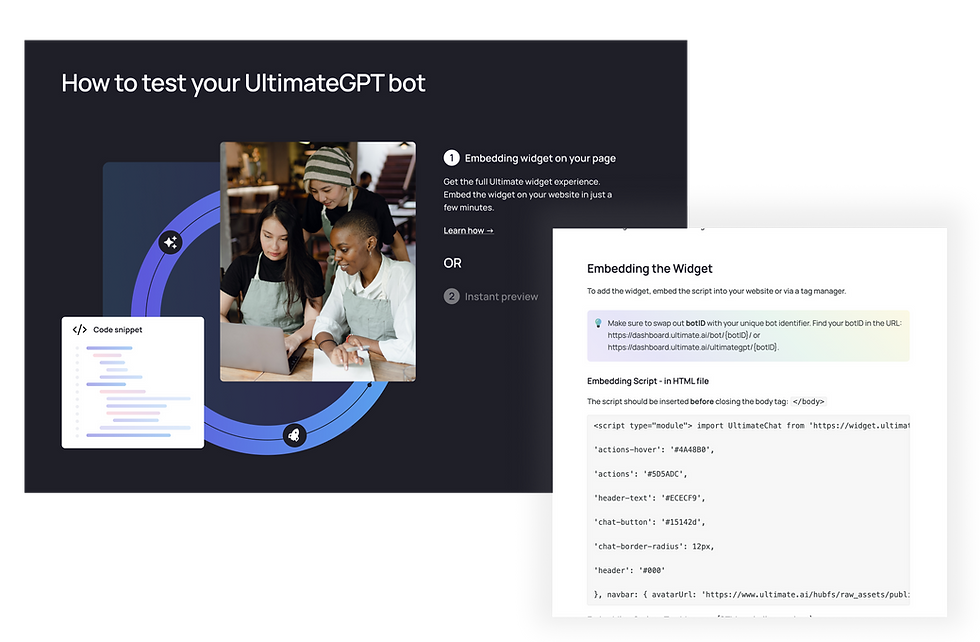
To replicate real-world conditions, we added website embedding for testing. This gave users immediate feedback through actual conversations, making it easier to spot and fix issues early.
03. Marketing funnel entry point
The self-serve trial was placed directly on the marketing website, reducing friction and creating a smooth path from browsing to hands-on experience.
04. A guided first step into the product
A minimalist onboarding dashboard was designed specifically for self-serve users, giving them a guided overview of the product with restricted access. Enough to understand its value without getting lost in the full product

THE IMPACT
15 mins
Average setup time for a prospect, down from around 2 months
327+
Prospects who signed up and tested the bot independently over 5 months
€480k
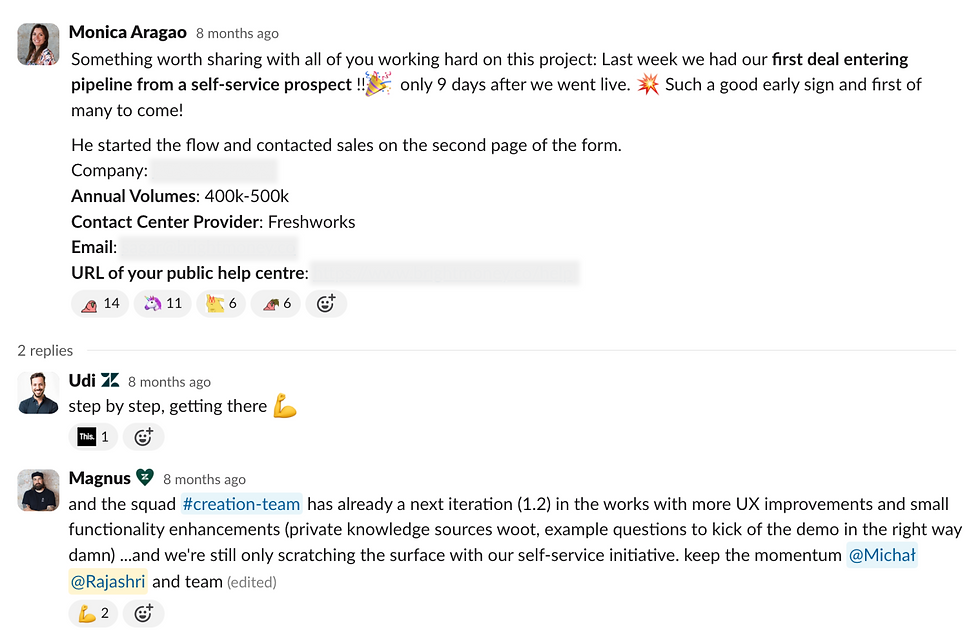
Revenue generated directly from the self-serve trial
MY 'Cupcake' MOMENT
LEARNINGS
Let people explore on their own terms. Giving prospects the space to explore independently made a real difference to engagement.
Agree on success early. Defining the metrics with GTM, Product and Marketing turned opinions about the product into decisions.
Write constraints down as you hit them. A running log of technical limits saves the next iteration a lot of pain
© 2026 by Rajashri Achar. Created on Wix Studio.